Thursday, September 12, 2013

Talk about your Ups and your Downs

I had been debating on whether or not I wanted to blog about this, but I came to the conclusion that I wanted to share because some past events have deeply impacted us. The past few weeks have had some really wonderful moments and really awful ones too. After the August team left and we wrapped up some loose ends, and we began to prepare to fly to Scotland for my brother-in-law Stratton’s wedding. We had been looking forward to this event for quite some time and we so excited to be able to share this special day with Stratton and Hunter and our families. The wedding was planned to be in Scotland because Hunter’s family are the McRae’s and their family heritage traces back to a beautiful and famous castle called Eilean Donan near the Isle of Skye in the north of Scotland. They allow weddings at the castle, so that is the venue they chose for their wedding. We told them when we moved here that no matter where they decided to get married, we would be there. We knew we’d have to travel if it was in the U.S. or somewhere else, so it didn’t really matter to us where they chose.
We were all geared up to go, packed, excited, tickets printed, passports ready, etc… We had Wilson drive us down the night before we were to leave to Kampala so that he could drop us off at the airport and take the car back to Masindi so that it could be used there for people who needed it. We shared a nice meal the night before with Wilson, had a good night’s sleep, and were headed out the next morning on August 27.
We decided to swing by a shopping center that we frequent to buy a couple bottles of water to drink on the way to the airport. We were only going to run into the grocery store for a second, buy our water and be on our way. Wilson noticed Newman’s bag in the front seat, so he moved it to the back where it could not be viewed as easily, just in case someone was tempted by it. We parked by the entrance to the shopping center where there is a police guard station where there are usually 3-4 police men. There is also parking lot security all around the entrance to the lot where we parked, so we felt fine running in to buy some water with our bags still in the car. We have parked here dozens of times and always felt perfectly safe. A lot of people have their drivers stay in the car while they go inside, but Wilson is more than a driver to us, he is our friend, so we told him to come with us. We walked into the store smiling and joking and excited about the day. We were gone not more than 5 minutes when we walked back to the car and Newman opened up the passenger side door. It was unlocked which I thought was odd. Wilson went to the driver’s side and unlocked the rest of the car. Newman looked in the back seat and asked, “Wilson, where are our bags?” I thought he was just pulling my leg trying to scare me. I looked in the trunk and our suitcases were there with our clothes inside, but the 3 bags that were in the back seat were gone. We all immediately went into panic mode. My purse was gone containing my wallet with driver’s license, credit card, debit card, and most importantly my passport. My Kindle, phone, chargers for each, and toiletries were all inside. Newman’s bag containing his computer, work documents, work checkbooks, and other items was gone. Newman’s backpack containing our very nice Cannon camera which we gave each other last year for Christmas, his nice rain coat, some clothes, his ipad, etc… all gone. We ran over to the security guards who were standing maybe 20 yards away to ask if they had seen anything. We were returned with blank stares and then a shrug. We went over to the police all standing there who too seemed to have zero insight. They told us to go downstairs to watch the security camera tape. Wilson and Newman went downstairs while I stayed by the car because the lock was now broken and I didn’t want to lose what was left of our belongings. I started to cry a few times, but made myself hold it together because I knew we had a very long day ahead of us with a lot to try to figure out. Wilson and Newman saw on the video tape, a blue car pull up next to our car, the diver stayed inside while 2 or 3 men got out, got into our car, took the bags, and sped off. It only took a few seconds. While they were watching the tape, the pharmacy store owner from across the parking lot could see something was wrong with me and asked if everything was ok. I said, “No, we just lost everything. They stole everything.” He was dumbfounded and said this had never happened in the 7 years he had his store there. He said they probably followed us from the hotel, targeted us, and then robed us. I don’t know if that is true, but it’s possible. When Newman described the car to the police, they said that there was nothing they could do because they couldn’t see the license plate. I of course became angry because they refused to even try to look for the car based on its description. They just sat around doing nothing.
The next two frustrating hours were spent waiting on the police report to be written up, and then waiting for someone to bring us some stamp that needed to be put on the report. Meanwhile, I called and had all of my cards canceled, we had our PMI checks canceled, printed new etickets for our flights and hotel reservations since they were now all stolen, and had passport photos taken. Newman even tried texting the thieves through my stolen phone in hopes that their conscience would kick in and they would do the right thing by coming back. After waiting what seemed like forever for this stamp, they decided that we should just drive down the street to the police station and get it stamped there. We did that and then went straight to the U.S. Embassy to try to have temporary passports issued. We were still hopeful that if we got the passports in time, we could still try to make our flight. As time passed, it became more and more apparent that we were not going to make the flight, so then our focus just shifted to trying to get our passports and reschedule our flights. Our flight was supposed to leave at 3pm and we didn’t get out of the embassy until around 4 with our temporary passports.
 We called Emirates Airlines and they said to go to the Kampala office to try to figure everything out. When we got there, the place was full of people ahead of us in line, most of which were not in a hurry and were just there to book trips. I felt like everyone could see the panic and pain in our faces, but we tried to remain calm and wait our turn. Finally there was a free attendant, and even though it wasn’t our turn, Newman jumped up and asked, “Is there any way we can be helped now, we kind of have an emergency.” He quickly told her what happened and that we are trying to make it to our brother’s wedding. She looked up in the system what flights were available with Emirates and other sister airlines and told us there were absolutely no flights available until September 9th. The wedding was August 30th, so that was not going to work for us. At this point, I have totally lost it and am holding my head and crying at the desk in front of a ton of people, and Newman too starts to cry as he explains that if this was just a vacation, it wouldn’t matter, but that this was for his brother’s wedding which he cannot miss. I could tell that the woman finally realized the gravity of the situation and seemed genuinely sorry that she could not help us unless we could pay to upgrade to 1st class. We considered it for a second until we realized that we had canceled our credit cards, and after losing thousands of dollars’ worth of items that morning, buying an expensive ticket would not be the right thing to do. We walked out of the office and down to the car where Wilson was waiting. We just shook our heads, and we told him we weren’t going. He said, “Let’s go home.” We all agreed that we didn’t want to spend one more penny in Kampala and even though it was later than we would usually try to make the trip back to Masindi, we just all wanted to go home.
We were silent in the car for the most part, except every once in a while someone would say something to the extent of, “If we had just…” but running through those scenarios was only fueling our fire. Throughout all of this I continued to pray that God would redeem this situation. I kept telling myself, God hasn’t left us. After reaching about 5 miles outside of Kampala, Newman’s phone rang and it said “Stratton Lawrence”. Usually calls from outside of Uganda show up as “Blocked”, but this time is said “Stratton Lawrence.” He answered the phone and after a few seconds, he couldn’t talk anymore because of his tears, and I realized that Stratton was calling to let us know that he was buying us tickets. He found flights on British Airlines, which I guess Emirates hadn’t looked at. We turned around and headed back to Entebbe. We were to fly out the next morning, and we would make it to the wedding after all. We couldn’t believe the generosity and now had tears of joy instead of pain. The rest of our trip went off without a hitch. The timing of the new flights was actually better than the ones we had before, and we didn’t have to change any of our reservations for hotels or the rental car.
We had an amazing time in Scotland. The rehearsal dinner was in a pub where we ate great food and shared wonderful toasts about Hunter and Stratton. They had around 35 or so guests which was a perfect crowd of family and friends. The wedding day started off with typical Scottish weather with wind and rain, but just as the ceremony was to begin, the sun came out.  Stratton and Hunter really wanted to have the wedding in the outdoor courtyard of the castle, so their wish came true as the rain allowed for this to happen. Stratton’s father, my father-in-law, Bob Lawrence conducted the ceremony which was really sweet. Hunter of course looked beautiful and Stratton was beaming. It was such a sweet wedding. Afterwards we shared an intimate candle lit meal at the lodge which was delicious. Hunter and Stratton incorporated so many neat Scottish traditions into the whole event. We had a two man band that played music afterwards, and everyone had an amazing evening together. We are forever grateful to Stratton and Hunter for making sure that we made it for this unforgettable event. We knew that all of our lost possessions could be replaced, but we couldn’t replace those memories. Apart from the wedding, Newman and I were able to explore the beautiful highlands of Scotland which are breathtaking and we even had a 24hr layover in London where we were able to do a bit of sightseeing before returning back to Uganda.
Overall we have felt God’s amazing protection, and we are so thankful to him for giving us such an amazing family who have helped us out in every sticky situation we have seemed to get ourselves into.  Without a doubt, August 27, 2013 has been the worst day of my life thus far, but it has also showed me that I have had a pretty good life compared to others if that truly was the worst day of my life.
We are still trying to recover from everything, and we still find ourselves looking for an item and then realizing it was in the stolen bags, but we are surviving and are as strong a team as we have ever been. We had a small laugh when we began to discuss all that we have been through in our short two and a half years of marriage already.
I’m so thankful for my faith and although I would never want to relive that experience, I am thankful for what it has taught me. We are struggling some with feeling safe and we do find ourselves being skeptical now of seemingly innocent people and places, so please pray for us in that respect. We still have a big job to do here, and we want to be able to give it the attention it deserves. Thanks so much for all of your prayers!

Love,
Trish
I stole some of my father-in-law's photos because, as previously explained, our camera was stolen so we have no photos. Here are some from the wedding.

Hunter's Arrival with her Father

 
Walking down the "aisle"
 

Lawrence Family 


Lawrence and McRae Family 


The view from the courtyard as the wedding began

Wednesday, August 21, 2013

Do your homework!


Do your homework: What kind of missions are you supporting and could it actually be hurting?

I think there comes a time in every “missionary’s” life when something finally clicks. You finally start to “get it” and really see what is going on the in the developing world. Actually, this may happen even if you are not working in the developing world. Maybe you are working in the U.S. doing social work or are in some way involved in trying to help those who are less fortunate. You can still relate to the discussion I am about to begin. I think it took us about a year of living in Uganda for the veil to be pulled off of our eyes, and we began to see clearer what Aid and missions work is doing.

I want to begin by saying, if you do have a heart for helping others, which I think most of us as humans do at least to some extent, then bravo. Good for you! That is what we are supposed to do. We are supposed to help each other out. There are going to be times when you are on a mountain top, and your friend is in a valley and needs some help, and you will help them. Then there will be a time when your life has taken a downward turn, and you will appreciate that same friend’s willingness to pull you out of your slump. I just wanted to make that point because even though I am coming to realize that there is some harm done in helping, I don’t believe that we should ever quit loving our neighbors and offering a helping hand.

So as I was saying, once we had been living in Uganda for about a year, something started to change within us. We had been exposed to the great need all around us. We had been exposed to so many different people and organizations trying to do something about it. All of these groups seem to have great names with words like, hope, cure, vision, compassion, peace, and empowerment. We met people working for these organizations. We all have very interesting and different stories, but we all shared some sort of calling to help. Our lives had led us to this point where we had the opportunity to experience missions full time and totally immerse ourselves in this life instead of just doing short term work, going to fundraising events, and writing checks (all of which I think are equally great things to do and be involved in). 

This is a difficult thing to describe, but I will try to put it into words as best I can. The conversations Newman and I had with one another about the business of foreign aid began to change. We both felt like something was off, but I couldn’t put my finger on it. When I really think hard about it, I think that these feelings came about from just a few frustrating interactions between me and the local people. I felt like we were here to help, and people seemed to want our help at first, but then when it came time to do the real work, nobody wanted to put forth the effort. I think this is universal. I am not saying that our neighbors, or our staff, or Ugandans in general are like this. In fact I have come across many who are willing to put forth the effort and are highly motivated. However, there were those who I interacted with, and I just felt like they wanted me to spoon feed them and something just seemed off. This really seemed to come from strangers more than people I knew. They saw a white face, and they thought “Money!” This may sound harsh or politically incorrect, but it’s the truth. In the U.S. we are so sensitive to racism and racial profiling which is a good thing. We have progressed and are so accepting (most of the time). Here, you walk down the street and you are completely called out simply because of your race and you are immediately judged and treated differently because of it. At first, it was cute to have a little baby yell out “Mzungu!” and I didn’t mind so much when children would run alongside me and giggle when they touched my arm. After about a year of that, you kind of start to get annoyed and think, why do they do this? Who told them to act this way towards us? What have the mzungus done to receive this type of attention? So, once I started to consider why people seemed to want to be spoon fed and why just because of my color I was a celebrity/target, I became concerned.

I began to dig deeper, and as it turns out people have been writing about and researching this very concern of mine. It wasn’t just that my heart was becoming hard. Apparently I was just finally catching on. I was just really starting to see what was going on, and I took it as a good sign that I actually cared enough to reevaluate what we were doing. I began to see that people wanted me to hand them everything for free and children saw me as Santa Clause because we had taught them to think this way. Enough people had come over to these communities with the intention of lending a helping hand, and very often it came in the form of free gifts and services. Of course that is appreciated by those on the receiving end and those on the giving end receive a huge amount of satisfaction and are greatly humbled by helping.

There was an awesome article I read recently on Forbes.com, and it was an interview with Peter Greer, CEO of Hope International, which is a microfinance organization. I will put the link to the article below because Peter really hits the nail on the head as far as what I have been feeling and noticing. He quotes an author, Bob Lupton, who describes so well what happens when people try to help those in need by just giving it away for free. He says, “when he gave something the first time, there was gratitude; and when he gave something a second time to that same community, there was anticipation; the third time, there was expectation; the fourth time, there was entitlement; and the fifth time, there was dependency. That is what we’ve all experienced when we’ve wanted to do good.” I have seen this even with the children that come to my front door day after day. They start out with just giving us a smile and a hello, and so I give them a sticker or a drink of clean water. After a few more visits like this to our house, we got less smiles and friendly greetings. Instead, we just get a face in the window that says, “you give me water” or “you give me money.” 

Another great example that Peter Greer gives the interviewer is of a community in Haiti that was visited by a missions team each year that would identify the household with the most need, and they would build them a new house. The community caught onto this and instead of trying each year to improve their living situation, they competed to be the neediest or the poorest, so that they would be chosen to receive next year’s new house. Now, for that team of people who were on the missions trip building houses, that trip probably changed their life. They were probably forever impacted by what they saw and the people they met. They probably went home and had a whole new outlook on the wasteful spending and lifestyles of the people around them. I think that’s a good thing. I think we all need to realize how the developing world lives, be grateful for all that we have, and be willing to share our blessings with those less fortunate. If it takes a short term missions trip like that to change someone’s life and turn them on to missions, then I think that’s great! That’s how it happened for me. I went on a short term trip with PMI, and was forever changed. All that said, do your homework and look into what you are really doing. Look at how it is impacting that community. Is what you are doing sustainable? Are you creating a dependency? Are you encouraging and empowering a community to help itself, or are you just giving handouts? You can argue the same thing in the U.S. Are we encouraging handouts and creating a dependency on Aid or are we empowering and encouraging people to help themselves? It’s the same as raising a child. I have yet to do it myself, but I have been around enough different families to be able to say that parents who gave their children everything they wanted without them having to work for it, usually ended up with children who were less grateful and more dependent. Parents who had their children do chores and work for their allowance or whatever they were given, generally had children who have a strong work ethic, they appreciate what they earn, and they are less dependent. I think we can all agree on that.

This does not mean that we don’t need people to give their time, money, and resources. It takes people giving those things to set people up for success. We need donors to give to PMI so that my husband has a salary and so that we could build all of the buildings for our clinic and supply them with beds and equipment. We need short term missions teams to spread the news about our clinic on the ground while providing medical care and education. The difference is though that PMI is empowering and enabling a staff of Ugandans to run their clinic sustainably, change the lives of their families, and provide affordable and high quality care to the community. They are not giving it out for free, therefore those who come to the clinic are showing that they are taking ownership of their healthcare, and they value it.

Basically all I am trying to say with all of this is, do your homework. Research the organizations you support. Think about how you are trying to help, and even consider if maybe what you are doing is doing more harm than good. Please read this article below, as he puts all of this into words better than I can. It’s a two part article, but I am only posting the link to the 1st part below. Also, I am going to attach a link to another article that is a little more on the amusing side and is also SO true. It’s called 10 Reasons I Love/Hate Being a Missionary. I can identify with just about every word he says, except that we don’t have children and he does; however, we have missionary friends who do have children and I know they identify with this 100%.

Sorry this is so long, but it’s been on my heart for a while now, and I just thought I’d share because I know a lot of our readers have a heart for missions and I want people to really consider this. Thanks so much for reading and for supporting us. We love you all!

Love

Trish


http://bringlove.in/10-reasons-why-i-lovehate-being-a-missionary/

Monday, August 5, 2013

Back in Uganda

Hey Everyone!
 

Some of you may not have even known that we left Uganda, but we did just take a quick 12 day trip home to the U.S. that was very last minute. When my parents were still here in Uganda, and Dad had just finished his last day of work for his internship, we got a call that my grandfather, Dad's father, was in the hospital and not expected to recover. We had all planned on going on a vacation to other parts of Uganda, but instead, Mom and Dad changed their flights to go home the next day and Newman and I were blessed to be able to book a flight home as well. It was very last minute, but it worked out so well. In fact the timing couldn't have been better. I did not know if Newman was going to be able to make the trip because of work, but PMI of course was so supportive and told him to be with family and since we were planning on being away on vacation anyways, the clinic was prepared for us to step away for a few days. After loosing my other grandfather last year and being away for all of that, I said that if another grandparent looks as though they may be passing then I wanted to go home. I was so blessed last time to have Newman's parents with us in Uganda when my other grandfather passed away and then again to have my parents here with us when we got this most recent news was such a blessing.
           The family told Grandfather, who at the time was basically unresponsive, that we were coming home. Well that seemed to do it, because by the time we got home and headed straight for the hospital, Grandfather was sitting up in the bed, talking, and eating. He certainly was weak, but apparently it was a dramatic change from the days before.

 
Grandfather was discharged home two days later on hospice care, which was great because then he was so close to visit with. He showed some slight improvements while we were home, and is still resting fairly comfortably at home amongst family. I feel so blessed to have been able to spend such a sweet time with him. He is a remarkable man. I also loved my time with my Grandmother who is always as sweet as she can be but can also provide some hilarious comic relief in any situation.
 
We returned back to Masindi on August 2nd after 2 unexpected nights in Entebbe and Kampala waiting for our lost luggage to arrive. It arrived safely with all of its contents, and we made it back to Masindi in time for Newman to do some work at the clinic before the weekend. We had two new Pharmacy students arrive the same day, and we have loved getting to know them.
Coming back here for some reason was really hard this time. I think just after having such a good time with family and coming back and not having my parents still here was tough. We spent a lot of time in prayer and now are feeling refreshed and focused to get the jobs at hand done. Please continue to pray for us. We especially need prayer for focus, for God's guidance, for contentment in where we are in life currently, and for God to move this project forward to where he wants it to be. Our time here has flown by and it will be over before we know it. There is much to accomplish, and I hope to enjoy the time we have an be present and not focus on what is next for us too much.
 
We have a team arriving on Saturday night which includes some old friends and Newman's little brother, Will Henry. We are excited about serving with them. Please pray for their travel and for our time together serving between 1,000 and 2,000 Ugandans next week.
 
That's what's going on in our lives currently. I didn't want to write too much because I also wanted to attach at the bottom of this update, a part of my Dad's reflection on his time here in Uganda and how the Lord used him. I loved what he had to say, so I hope you will be inspired by it as well. Thanks for your prayers and support!
 
Love,
Trish
 Below are some highlights of being home
 
Meet baby Jones Dew for the 1st time
 
Mom and Dad telling Grandfather about Uganda
 
Helping Liza set up the nursery after finding out its a boy!!
 
Got in a little beach day :)


Made it to Liza's 1st baby shower


Excerpt from my Dad's sermon : God's Continued Revelation of Himself
 
My first sermon was to be given to the English speaking service at the Cathedral. The topic I was asked to preach on, (to these people I had never met), was Stewardship. I said to Francis, “In the United States, Christians are happy for the pastor to preach on Salvation, God’s Love, and many other topics, but when he preaches on Tithing as the Biblical standard of stewardship, these people are often offended and feel that the preacher has trespassed into their personal lives.” Francis busted out laughing, began shaking my hand and said in his deep African voice, “Indeed, indeed. Thank you, thank you. It is the same here.”

He told me that what a Muzungu preacher says has greater impact and makes a greater impression that which a Ugandan pastor says. So my words, he said, could make a big difference in the growth in understanding for those who heard them. Muzungus, by the way, are white people.
 
I recognized this as a real opportunity, and also realized the importance of all that I might say or represent, for the rest of my time with these people.

On that Sunday, I introduced myself to the 800 faces who looked at this Muzungu, by saying Orayhota (did you sleep well), they responded-Kurunge (we are well). I said Mukama siimwe – Praise the Lord-. They said, “A siimwe”- Praise Him- They were smiling. I said, “Mukama akehu Omugisa”- God Bless you. They responded, “Ego, Calle, Kurunge” all affirmations. They clapped and some gave a high pitched “La,la,la,la,la….”.  I then read the first 2 verses of psalm 8 in Runyoro which speaks of the majesty and sovereignty of God, and in English I invited this empowering God to fill our hearts in order that He might instruct us.

 I then preached from Mt. 16, “If any man would come after me, let him deny himself, take up his cross and follow me.” God had given this scripture to me as I asked myself, “How can I use scripture to support God’s call for us to leave our comfort zones as is required in order to be Godly stewards of our resources.”  I referenced Noah, Moses, and best of all Jesus who left the comfort of heaven to take on human flesh and die in our place.

 When I finished preaching several Christians from the congregation came forward and spoke in Runyoro. I thought they were making announcements of upcoming events, but Francis told me they were confessing that they had been robbing God in their offerings and wanted prayer that they might change their ways.

God’s Holy Spirit manifested itself in giving me the message

As I looked ahead to future preaching dates, I asked Rev. Francis what the scheduled readings were for those Sundays. He told me what they were, but said, “Feel free, my Brother. Preach on what God places on your heart.”


Patti and I would read the Psalm, OT and NT readings from the daily office every morning before I would go to St. Mt. and I would think about what I was learning about the people I was meeting and ministering to.

 In the 2nd week of my internship, I went to the women’s fellowship where I was asked to “Give a Word”. This means to give a teaching of some sort in whatever way you are led. I am so glad I have read the Daily Office as now I have some basis for God to give me something to say.

 In the prayer time that follows I am made aware of several issues of demonic oppression. Mrs. Margaret Asiimwe has given a witness of how she and Rev. Francis spent all night in deliverance ministry in the home of one of their Christians who had become involved in witchcraft.

 One of our readings that week had been Mt. 21 where the Jewish religious leaders ask Jesus, “By what authority do you do these things...” meaning by what authority do you reinterpret the Writings of the Law and the Prophets; by what authority do you  raise Lazarus from the dead, cleanse the Temple of Money changers, cause a fig tree to wither at your command.

 My teaching point was that Jesus is God Himself and he is the author of God’s Word so he has authority; He is the creator of life so he has authority over death; He Himself is the true Temple and has authority over all things spiritual, He is creator of all and has authority over Nature itself.

 It occurred to me that these God wanted these Ugandan Christians to understand that at the Name of Jesus, EVERY KNEE in heaven and on earth and under the earth MUST BOW and EVERY TONGUE CONFESS that Jesus is Lord of all. Satan and demons pose no threat to those who understand this; to those who have released themselves to Him.

So this is what I preached at St. Stephens Church in the village of Rwijeere. At one point I said, “My Brothers and Sisters, when you command Satan himself, in the name of Jesus, to leave a place or a person, he MUST LEAVE. He has no choice.” They broke out in applause and started the high pitched “La,la,la….”.

I had asked Francis if it would be appropriate to invite people to come forward to dedicate or rededicate their lives to Christ at the end of my sermon and he thought it would be. So when I finished preaching he did that. I preached at 2 services there that day and both times everyone in the church came forward to be prayed for.

 Again God had revealed himself in letting me know what my audience for that day needed to hear from Him, and He opened their hearts to hear it.

 The last Sunday that I preached was on July 14, at the village church of Kijura called St. Peters. He took me to visit with the lay leader in charge of this church and I asked what the greatest pastoral challenge was that she had. She very quickly said that most of her congregation was made up of families where the mother and father were not married. She suggested I might preach on this issue.

Two weeks previous to this I had been given the opportunity to teach a class of 15 to 18 year olds, in the church sponsored school. The topic had been appropriate and inapprop courtship behaviors, choosing a partner for marriage, and characteristics of a Godly marriage.

There is a whole sermon I can assure you in that experience alone, but these kids had come up with some questions for me to answer that were very telling. As I wrote my sermon about the importance of marriage which is blessed by God through a priest, I addressed several of these questions.

 3 of the questions were,
          - If it was OK for men to have many wives in the days of Noah and Abraham, why is it wrong   now?
          - Why does a man ever want more than one woman, or a woman want more than one man?
          -          Is divorce acceptable if the man or the woman is infertile?

 So I preached on the scriptural bases and affirmation of the sacrament of marriage. My interpreter was the chief warden for the church. As I was preaching I noticed some laughter coming from the choir that was seated right next to me, and I thought they were probably laughing nervously because they were living with people they were not married to.

 As I finished preaching I suggested that those who were living in unmarried ways might contact Rev. Francis and ask him to schedule marriage ceremonies as he would be only too happy to do this. Francis then said to this congregation, “Ladies if you are not married to the man you are living with and are now willing to be married to him, will you come forwardd to be prayed for. Women began coming forward, some coming from the choir, and soon the altar rail was full. We layed hand on each of them and prayed a blessing on them.

 They went back to their seats. Francis then asked the men who were living with these women to come forward if they were ready to make those relationships right by getting married, so that they might be prayed for.

 No one came. I closed my eyes and prayed very earnestly. I opened one eye and saw one man at the rail. I went back to praying and before long more began to come. I understood what the laughing had been about as I say my translator, the chief warden come forward and kneel down. We layed hands on each of them and prayed a blessing.

Later that afternoon, Francis was supposed to pick me up at 4 to go to the home of one of the Christians for prayer. I called him at 4:45 to see where he was, and he said he was on his way. As I got on the back of his motor bike, he apologized for being late, and said he was held up by the 10 couples who had come to his office at the church for counseling and to register to be married.

I wish I could somehow describe to you just how counter cultural such a thing as this is in Uganda. This response was not secondary to a 5 week teaching on marriage and family relationship. It was not because I was so convincing in my 30 translated minutes on what God’s word says about marriage.

The Spirit of God Himself had gone ahead of us and lit the kindling that had already been layed through the teaching and pastoring of Francis and the lay leader Beatrice. I was simply blessed to be the Muzungu match for what God had already prepared.

Now, Folks, what you have heard in this testimony of God’s continual revelation of Himself in a recent 6 week period of my life is only a reflection of how He showed up to empower and enable my preaching efforts as I sought to be His Ambassador in Masindi, Uganda.

In fact He revealed himself in every aspect of our time over there. Here in a place where the water must be boiled in order to drink it safely and where  food born intestinal parasites are common, we had not one sick day. 

In a place where, the education and commitment of pastors is sometimes much less than one might hope for, I was placed under the mentorship of one of the most Godly and Gospel committed men I have ever met.

 The list of evidence of God’s revelation of Himself goes on and on. My prayer for you is that your spirit has been quickened by my report of the reality of the Living God who wants better things for you than you can desire or pray for. He will go before you as he has always gone before His people, and if you allow it He will light a path for you that is more fulfilling than any path you might ever walk. Amina, Mukama Siimwe, Mukama ahehu Omugisa.


Thursday, July 25, 2013

Out of Africa


We are now in our hometown of Charleston, SC, after having spent 6 wonderful weeks in Uganda. I arrived in Africa on May 28, crying because I was so happy to see our children, and I departed Uganda on July 17, crying as we said our good byes to so many that we had come to love, during our brief time there.


Our dear, hardworking neighbor, Constance, and her 7 grandchildren, all came to say farewell. The faces of these little children are forever etched in my mind.

Walter, the 6 year old, became a regular fixture at our house, on many afternoons.

Walter would bring fresh mangoes or passion fruit that he harvested from the trees in his yard, knowing that I always had a few bananas or smiley face stickers for him in return.


Many times Walter and I would sit on the front steps of our house, and I would read stories from a children’s bible to him. He is learning English but is still limited in his vocabulary. On days that he would pop by while I was busy in the kitchen, I would give him paper and a package of 4 crayons, to draw pictures for me. This would keep him truly busy for an hour. He drew pictures of the pigs and chickens he helped to tend, and was very pleased when I posted the drawings on my refrigerator.


Children in Africa really do ‘make their own fun’.  On one occasion, 9 year old Muga, (Walter’s cousin) came to visit. He was pushing a stick that was about 3 feet in length and had a small plastic lid attached to the bottom of the stick, with a nail. The nail acted as an axle, and as Muga pushed it the lid would roll forward like a wheel. I asked him what he was pushing and he told me,

“It’s my bicycle.”


Another time Walter was walking through our yard pulling something behind him that looked like a toy truck with an attached cart. As I looked at it closely, it was a truck and a cart that he had made out of 2 quart size juice cartons with plastic water bottle caps for wheels. It was the cutest thing ever!


Three year old, Massias, who lived on the other side of our house, could always be heard in the morning as he ran around the yard making sounds like he was riding a boda boda (motorbike).  He had some imagination as he tore through the yard!


The sweet faces of the 30 women who gather to learn English are faces that I will not soon forget. I was invited to visit their class, and then later had them over for tea. They really appreciated being invited into a home where we could sit and visit. They sang praise songs and said lovely prayers for both John and myself. These are women who have a strong faith and are the leaders in their community. As a keepsake reminder of the day, I gave them crosses that I brought with me made by the children from Nashotah House Seminary.


And now, as I sit here in my air conditioned living room, in a comfy chair  my mind wanders back to the reality of the basic living conditions of the people in Uganda. (Looking back, even the “close encounters” I had with a cow and chickens at church don’t seem nearly as scary as they once did!) I am touched by how simple the lives of Ugandans are and yet how contented they seem to be.  It is so refreshing to see how joyful they seem,  visiting their neighbors, and how they graciously and sincerely extended hospitality to John and me, (these 2 muzugus), by saying to us again and again, “Thank you for coming. You are most welcome.”


They are a people who love the Lord and love to sing songs of praise. They worship with all of their might and are not self-conscious about greeting one another, routinely saying,

“Praise the Lord”.


It has been a summer that I shall never forget, and one that I know has made a lasting impression on me.


Recently I was talking to Newman, my dear son-in-law, about how I keep picturing, in my mind, the faces of these lovely, kind, soft-spoken people, and about how much I miss them. He summed it up best when he said to me, “You can leave Africa, but Africa will never leave you.” This is so true.


To all of our friends and family who have prayed for us and supported us during this amazing opportunity – please know that we have felt the prayers. They sustained us and spurred us on, and to you I sincerely say thank you and God bless you.


I am so thankful to the Rev. Francis Kajura, Vicar of St. Matthews Cathedral, and to Bishop George William Kasangaki, bishop of the Masindi-Kitara Diocese, for opening the way for me to be mentored and loved by the Christians whom they shepherd. It will truly make a difference in the way I minister to those God places in my path, in the years to come.


God’s Peace,

Patti   


From John:

The hope for Uganda’s future is the same as the hope for the future of the world. This hope is life for all,  motivated and empowered by Jesus Christ. This is the only motivation which will cause leaders to think about their people before thinking of themselves. It is the only motivation that will seek justice in a ruling culture that historically has sought its own self interest.


The majority of the people in the Masindi-Kitara Diocese are open to and hungry for a deeper understanding of God’s Word. We witnessed a changed attitude marked by new commitment as people gained new insights on truths about how God would have them live. In the 7 Sundays that we worshipped with them, we saw many come to the altar rail to commit their lives to Christ, to give testimony to changed hearts, to make right their marital relationships.


We are so very blessed to have been inserted into a place where God has already been blessing the efforts of dedicated servants who have labored sacrificially, for so long, in such loving and unwavering ways. The Teaching Parish Practicum that I went to Masindi to complete has exceeded my hopes and expectation,s and I pray has further formed me in preparation for whatever ministry God calls me to.


As Patti said, we are indeed so very grateful for your prayers and support.


Mukama Siimwe! Mukama akuhe Omugisa.  Praise the Lord! May God Bless you.
 
 
Walter's Train


English Class in the Guest House for tea

Saturday, July 6, 2013

Cooking in Uganda

Hello Everyone!

Because a large portion of the day is spent preparing dinner, I thought I’d write a little bit about how it is done and what foods are readily available.


Each week Trish and I make a trip to the market to shop for the week. The market is located in the middle of town and all of the booths are outside. Some of the vendors have a covering overhead of tin or an umbrella, and some are spread out on the ground on a large tarp.

Everything imaginable is found there such as transistor radios, shoes, recycled clothing, plastic dishes, mugs, towels and hats.

As you proceed toward the rear of the market (and follow your nose), you will find fresh fish, sides of beef or goat hanging from hooks, live chickens, fresh eggs, dried beans, rice, loaves of bread, tomatoes, eggplant, carrots, onions, cabbage, potatoes, bananas, plantains (matoke), mangoes, papayas, pineapples, sugar cane, lemons, avocados, and cucumbers. It truly is a sensory overload!


Trish has a few favorite vendors that she has been buying from and has introduced me to them. One of the vendors is an elderly gentleman that always greets us with a bright smile. After making our usual purchase of carrots, bananas or lemons - he usually gives us a complimentary mango.

Our next stop is from a tall soft-spoken man who always has nice tomatoes, onions and potatoes. We tell him if we want a ½  or a full kilo, which he weighs on a scale that is counter balanced by weights.

Our next stop is usually for fresh eggs.  Sometimes when we approach the vendor we find him napping, but he lifts his head as soon as he hears us say the word “eggs”. They are sold individually and put very carefully into small clear plastic bags which we hold delicately for the trip home.

When you reach home, you can’t just put the produce away in the fridge like you would if you just returned from the Piggly Wiggly. There is a process for each item to ensure that it is properly cleaned. If you want to be able to eat a vegetable raw, like a sliced tomato or cucumber, it needs to soak in a large bowl of bleach water for a few minutes to clean the skin. If you are going to cook the vegetable, a good rinse and a spray of bleach water is sufficient. The eggs too have to be rinsed because they often come with feathers and other unidentified matter stuck to the outside….you know they’re fresh. So after the process, we are ready to cook for the week and have only spent about $12 total. Unless we buy meat from Kampala after a trip down for work, or if we go to a restaurant in town, most of our meals our vegetarian. Soup, stir fry, beans and rice, avocado and tomato salad, and pasta are typical meals. Dairy products are a treat. We will bring cheese and yogurt sometimes from Kampala and ration it out as long as we can. Another key element to a successful meal in Masindi is making sure you have most of your prep work done before the sun goes down at 7pm in case you don’t have power that evening. It’s easy to cut your fingers if you are chopping vegetables by headlamp or candlelight. Also, you want to make sure you don’t overbuy for the week or have too many leftovers because you can’t rely on your fridge to preserve food for long.

            Should you decide to go out for supper and take a night off from cooking, there are 3 places which we frequent. One is Masindi Hotel, which is a quaint colonial hotel which offers a nice atmosphere, delicious Indian and Chinese dishes, as well as local food options. The second is another hotel owned by a British ex-pat and it has a farily extensive menu with Indian, local, and American dishes. You can have goat, lentils, hamburgers, club sandwiches, fish and chips, chicken curry, etc… The third is owned by the same ex-pat and it’s more of a local place, although it’s called Travelers. They have really good fajitas.

            If you want something on the run, you can pick up street food. There is always a slight risk in doing this, but if all goes well, you can enjoy a delicious snack. Typical street food options are Chapatis (fried flat bread), Rolex (flat omelet rolled up into a Chapati), grilled ear of maize (enjoyed if you have strong teeth), and meat on a stick (usually goat???).

            We have enjoyed many local meals when invited to dine with friends. You can always count on a very similar menu each time. These items consist of, matoke (steamed plantains cooked in banana leaves), cassava (boiled root with little to no flavor), millet “bread” (sticky dough made from millet flour), dodo (dark leafy greens), meat stew (goat, beef, or chicken), rice, beans, G-nut sauce (thin purple peanut sauce), cabbage, and sometimes whole fish. Most enjoy this meal without using any utensils. They use the sticky matoke or millet bread to soak up the rest. If you are invited to breakfast, you will most likely be served thick slices of bread with a thin smear of butter, boiled eggs, fresh bananas or mangos, and large mugs of tea that are 80% hot fresh milk a few large scoops of sugar, and a little tea. All of these meals are prepared with a lot of love and hard work. They have to hand gather fire wood or buy charcoal to heat their pots to cook everything. They cook out in the yard, under a tin shed, or in a separate cooking room. It takes hours of preparation and they find a lot of joy in hosting guests. It is said that a family is blessed if they host visitors, so we try to always accept their invitations.

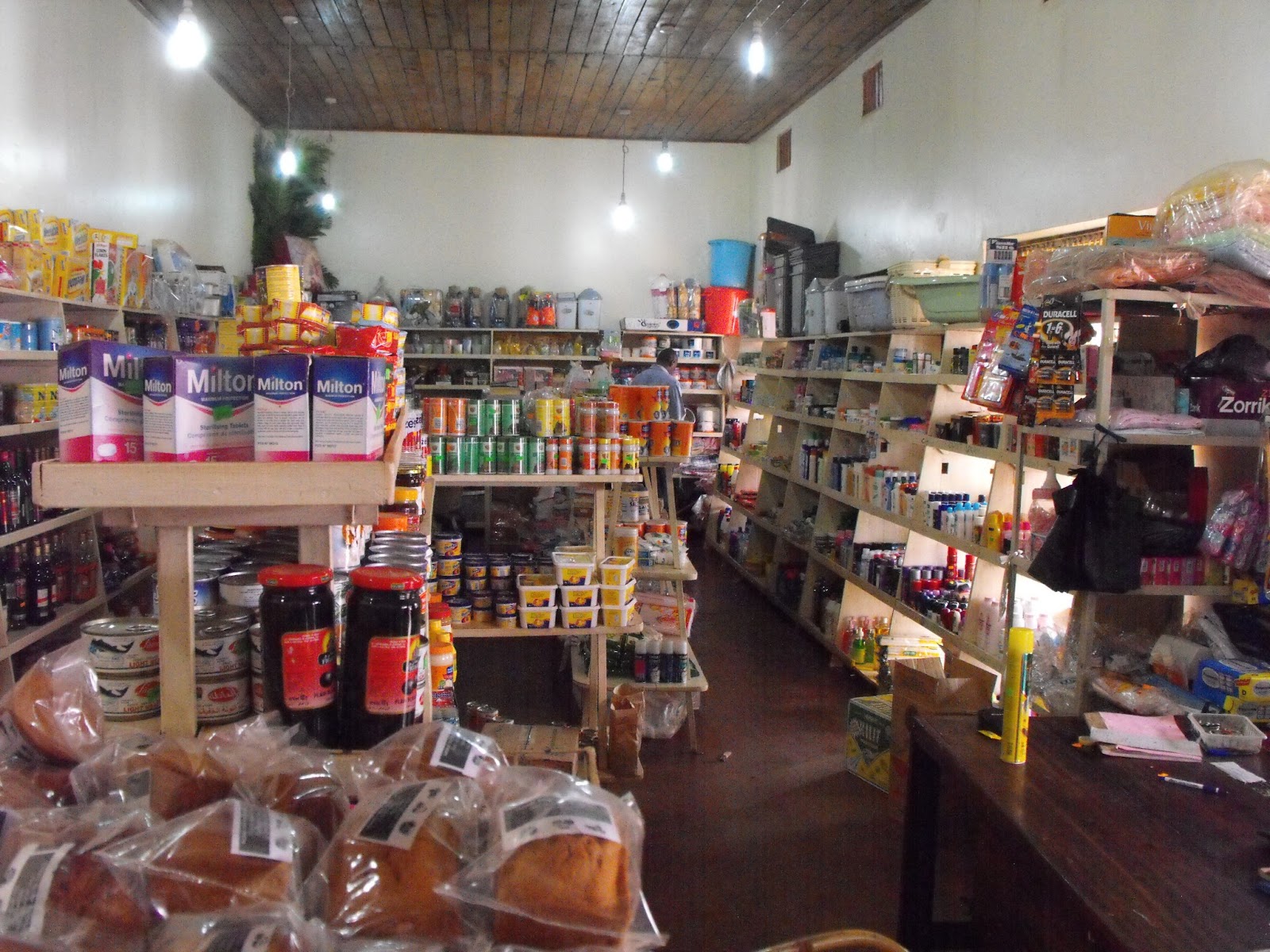
            Needless to say, we are not going hungry here. Everything we eat is extremely fresh and almost nothing is processed. Below are some pictures of the market and a local “grocery store”. Chow!


Saturday, June 29, 2013

Consecrated Elements, Healing Prayer, Dogs and Chickens in Mortal Combat


I am preaching in the village church of Miirya tomorrow.  Part of the program set up by Rev. Francis (my Dear Brother and fabulous mentor) has us going on Thursdays and Fridays, for pastoral visits, to the village area where I will be preaching on Sunday. There are many delightful elements to these visits, many very interesting elements, some humorous, and some just downright intimidating.  

Yesterday we arrived at the village church to meet the Lay Leader in charge so that he could go with us and direct us to the homes of elderly Christians who are not able to get to church. The Lay Leaders are trained by pastors to function in planted churches as worship leaders until ordained pastors can be placed in them.  

As we went to our first stop we turned off of the red dirt road onto a path which was straddled by the car. I could tell by the window high grass on each side that it had been a while since a vehicle had passed this way. We came to a clearing which held several mud hut dwellings (one of brick), 3 small boys, a couple of older children, a middle aged man and woman, various chickens, and two small and undernourished dogs of undeterminable breed.  

All properties containing homes here are completely cleared of grass around and between the dwellings. This leaves a yard of hard packed red dirt which is swept daily of leaves and any foreign matter. 

We are expected by this family, and the couple comes up to us, with smiles and extended hands. This mother’s name is Ruth. Francis and I are both wearing clergy shirts and collars, mine being a seminary collar. It is customary for women and children to greet clergy by taking his hand and dropping down to one knee in respect. Children in school also greet their teachers this way.  I have tried to prevent them from doing this for me, but it is only makes for an awkward moment. So now as Ruth bends her knee to greet me I accept it and am humbled by it. 

I have greeted the 3 small boys who are covered with a film of the light colored dirt they have been playing in all day. I have taken their picture with my phone camera and shown it to them. They continue to stare at me, though now they are smiling. They are young enough and rural enough that I may be the first “Muzungu” they have seen.  


It is the woman’s mother who is the focus of our visit, and when she is made aware of our presence she walks to us with the aid of a stick, and bows at the waist to greet us, though I can tell she too would prefer kneel in reverence to Him whom we represent. Her name is Serena. 

We are ushered into the small brick dwelling containing an entry room and two smaller rooms to the side and back which are for sleeping. The floor is dirt and I look up to see the underside of a tin roof. There are 2 chairs side by side against the end wall with a small table in front of them, and a 3rd chair against the front wall. Francis and I sit in the 2 chairs and he drapes the table with a small “altar linen” embroidered with a cross. On this he places the chalice and patent which will contain the elements for the Eucharist. Serena sits on the floor as do the mother and father of the children.  

Francis begins singing a hymn, in Runyoro, as he opens his hymn book so that I can join with them. I am the only one needing this as the others have it written already on their hearts and minds. He goes through the service in the native language and as he raises the wafers and wine to bless them I know the meaning of the words he says even though I do not recognize them 

Other than the very few times I have brought communion to my own elderly parents or have taken it to residents of a retirement home, I have made very few pastoral visits like this. If any who read this have the opportunity to bring the Eucharist to those who otherwise would not receive it, let me encourage you to get beyond what ever might hinder you, and be the vessel of God’s Grace that this ministry allows. 

Those in this family who welcomed us and received the Body and Blood of our Lord Jesus Christ, and our prayers for healing and blessing, appreciated and benefitted greatly from it as did we who conveyed it to them. I remember Bishop Fitzsimmons Allison, in one of his teachings, asking his clergy, “Have you ever been fatigued at the end of a day and really wished you did not have to make that pastoral visit to the home or hospital that still lay in front of you?” Then he asked, “Were you ever sorry that you did make that visit?” This day I would said emphatically, "No!"


Whenever people are invited into a home or gathering in Uganda, they are fed. These are people who share whatever they have. They all have plots of ground that they dig in and produce some form of food. So following the Eucharist we were brought hot milk mixed with tea in a thermos which was poured into ceramic cups and also matoke and brown rice with a "sauce" on it. 

I have eaten much of this menu as it is the standard in the Masindi District. However, for me this was the intimidating part. It is impolite to refuse what is being offered. I know that intestinal parasites are common among these people. I am comforted by the warmth of the food, and the knowledge that heat kills parasites. In a month of being here, I have not had one day of illness. So I pray a serious blessing over the food I am served as well as a silent prayer for protection. 24 hours later I can report a clean bill of health.

As we walk to the car to go to the next pastoral visit one of the small dogs takes off behind a brown hen, and catches the most hind part in its teeth. A white rooster runs in and jumps on the dog’s head scratching with its feet and pecking; flapping its wings yet clearly remaining in harm’s way. The dog has released the hen to give attention to the rooster. The mayhem tumbles to the base of a tree which has a divided trunk yielding a small opening at its base. The hen and rooster shoot through this opening which is too small for the dog. A smaller dog has come up behind the first at this point which motivates dog #1 (chicken feathers still hanging out of its mouth) to turn on it. This altercation is short lived as hierarchy is re-established. I have to send a text to Patti which says “Pastoral visit to small village successful. Ends with small dog seeking meal of live chicken. Rooster jumps small dog and wins. Dog saves face by whipping smaller dog.”

Our other visits to bring prayer and the Eucharist were in similar scenarios, minus the animal entertainment, but including the blessings.


We had been invited to Bishop Kasangaki’s home in the evening to greet some visitors from Durham, England. There was a tent erected, the Mother’s Union from St. Matthews was there to sponsor, welcome, and sing joyously. A caterer arrived, late, to offer dinner of the standard fare, which I had eaten at lunch and seemingly all afternoon. Near the end of the event, during which everyone in attendance was either introduced or introduced themselves, a large goat ran around the side of the house, increasing Patti’s concern with each running step. It paid us no attention as it ran bleating and dragging 15 feet of tether rope behind, disappearing into the night. We the Muzungus were the only ones who took notice.

 Wishing you God's Peace, and with many thanks for the continuing prayers of you saints, we are In His Grip, By His Grace, and for His Glory,
 
John And Patti Sos